ADU Rules In Fullerton: A Simple Guide
December 11, 2025
December 11, 2025
Thinking about adding a small home in your backyard or converting your garage into a rental? You are not alone. Many Fullerton homeowners are exploring accessory dwelling units to create space for family, generate income, or boost flexibility. In this guide, you will learn what counts as an ADU, how the process works in Fullerton, what rules to watch, and how to move forward with confidence. Let’s dive in.
Important: Rules and fees change. Check the City of Fullerton Planning Division for current rules and numeric limits before you design or apply.
An accessory dwelling unit is a self-contained living space on the same lot as a primary home. It has a place to sleep, cook, and bathe. A junior ADU (JADU) is a smaller unit created within an existing home that typically has a kitchenette and may share a bathroom with the main house.
In Fullerton, ADUs are shaped by state law and local code. State law encourages ADUs to help increase housing supply. Local rules add details like placement, size, and design standards.
Most single-family lots in Fullerton can support some form of ADU, and many multifamily properties have options too. Your first step is to confirm your zoning, lot layout, and any overlays that apply.
Do a quick feasibility check by noting your lot size, where your current structures sit, and any potential utility or access constraints. Then speak with Fullerton Planning to confirm what is allowed on your specific parcel.
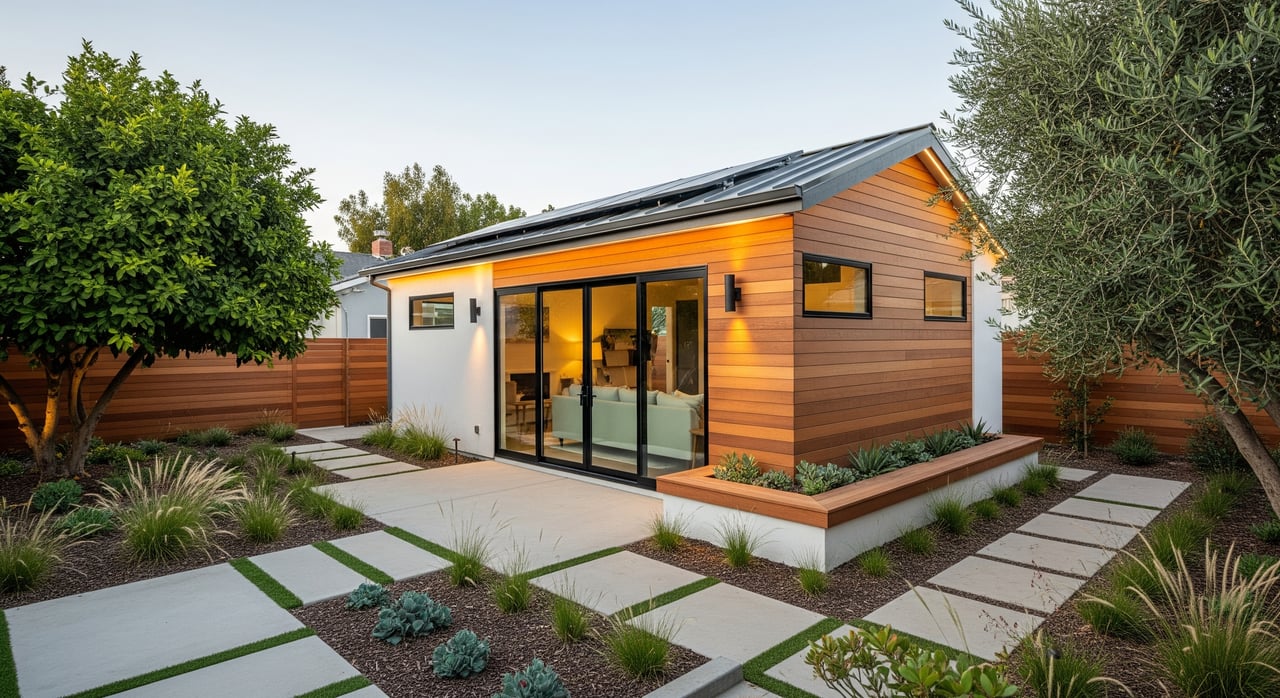
A separate backyard cottage or small home. This usually offers the most privacy and can be sized to fit the lot. It often costs more than a conversion because it is a new build with its own foundation and utilities.
An addition connected to your primary home. It can be a new wing or a second-story addition. Design and structural work are key considerations.
A conversion of an existing space like a garage, attic, basement, or accessory building. This is often the most cost-effective path because the structure already exists. Converting a two-car garage is a common example.
A small interior unit carved out of the existing home with a kitchenette. A JADU is often used for a family member or a lower-cost rental. There are different size and kitchen requirements than a standard ADU.
Every property is unique. Use the points below as a practical checklist, then confirm specifics with Fullerton Planning.
State law sets minimums and allows flexibility on many lots. Clarify how many units your zoning allows, and whether you can pair a standard ADU with a JADU on a single-family lot. Multifamily parcels follow different rules.
Maximum unit size and height vary by type and location. Detached units, attached units, and JADUs are subject to different caps. Ask planning staff how size interacts with your lot coverage and design standards.
Side and rear yard setbacks apply to new detached ADUs. Converted structures often have different setback rules. Confirm where on the lot a new unit can sit and how close it can be to property lines.
ADU parking rules are shaped by state law. Requirements can change based on factors like proximity to transit and whether you are converting an existing garage. Get clarity before you design your site plan.
You will plan for water, sewer, and electrical service. Some projects tie into existing connections while others may add separate meters or upgraded service. Coordinate early so trenching, panel upgrades, and capacity checks do not delay your permit.
Expect plan review fees, building permit fees, and possibly utility connection or impact fees. Some fees vary by unit size or type. Review the current city fee schedule before finalizing your budget.
State law limits certain local owner-occupancy rules in many cases. Long-term rentals are common for ADUs, while short-term rental rules can be different. Check Fullerton’s current stance on rentals before you market your unit.
Most ADUs are reviewed ministerially when they meet objective standards. If your property is in a historic or conservation area, additional design or placement standards may apply.
State law provides ministerial review for qualifying ADUs within statutory timeframes. Actual timing can vary based on plan quality and corrections. Ask the city for current turnaround expectations.
Unpermitted units can face fines and correction orders. If you have an existing unpermitted space, speak with the city about steps to bring it into compliance.
Private rules from homeowners associations or recorded covenants can limit design and placement. Municipal rules do not automatically override private restrictions. Review your CC&Rs and consult your HOA early.
Tip: Ask Fullerton Planning and Building for current submittal checklists and typical timelines so you can sequence design, financing, and contractor bids.
Speak with a mortgage professional to match loan structure, timelines, and draws to your project.
Adding an ADU is an improvement that may affect your property’s assessed value. Contact the Orange County Assessor to understand how new construction is handled and what to expect in your tax bill.
Many owners build ADUs for long-term rental income or to support multi-generational living. If you plan to explore short-term rentals, confirm Fullerton’s current rules before you invest in furnishings or marketing.
When you plan carefully and align your design with Fullerton’s rules, an ADU can add flexible space and long-term value. If you want to explore properties that already have ADU potential or to position your home for sale with an ADU strategy in mind, let’s talk. Connect with Zach Mickelson to plan your next step.
Stay up to date on the latest real estate trends.






Etiam non quam lacus suspendisse faucibus interdum. Orci ac auctor augue mauris augue neque. Bibendum at varius vel pharetra. Viverra orci sagittis eu volutpat.